


Summer Changes the Way We See a Room
There is a particular moment every summer when a room begins to behave differently.
The architecture hasn’t changed.
The furniture remains exactly where it was.
Yet everything feels transformed.
Morning light stretches farther across the floor. Shadows soften. Reflections become brighter, slower, almost liquid. A home begins to reveal details that quietly disappeared during the rest of the year.
I’ve always believed that summer is less about decorating than it is about allowing a space to breathe.
Rather than adding more, I find myself paying closer attention to the way natural light interacts with materials, how surfaces respond throughout the day, and which objects become unexpectedly alive.
Mirrors have always fascinated me for this reason.
Most people think of them as functional objects.
I think of them as instruments of light.
They don’t simply reflect a room. They change it.
A mirror captures movement, doubles sunlight, frames fragments of architecture, and reminds us that a space is never completely still.
Perhaps that is why they’ve become one of the recurring forms in my work.
Not because I wanted to design mirrors, but because I wanted to design objects that participate in the atmosphere of a home.
This summer, I’ve found myself returning to a small group of sculptural mirrors that each interact with light in their own way.
Some have been with us for several years and have quietly become among the studio’s most collected pieces.
Others were only recently completed, introducing new forms and materials that continue the same conversation.
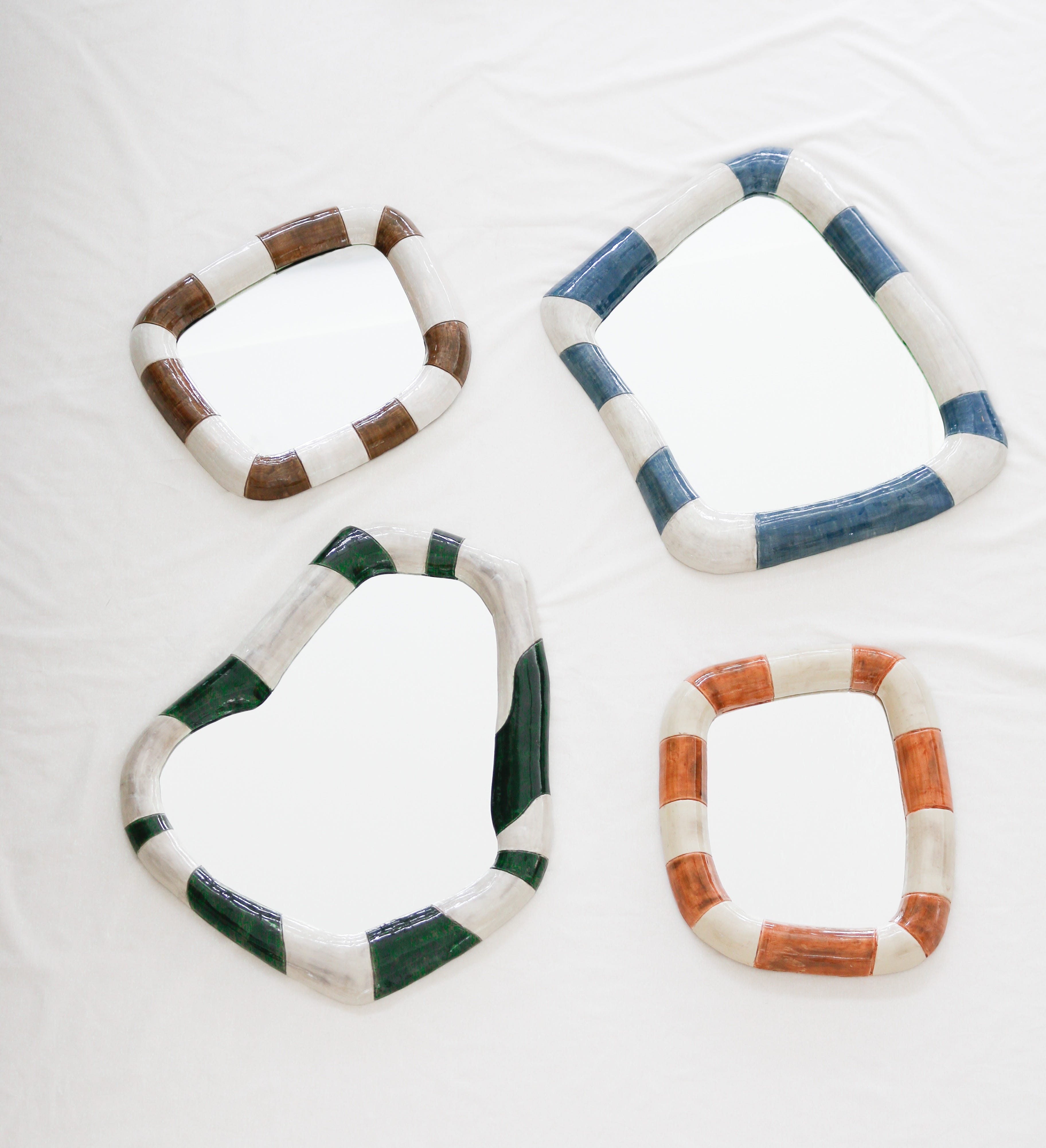
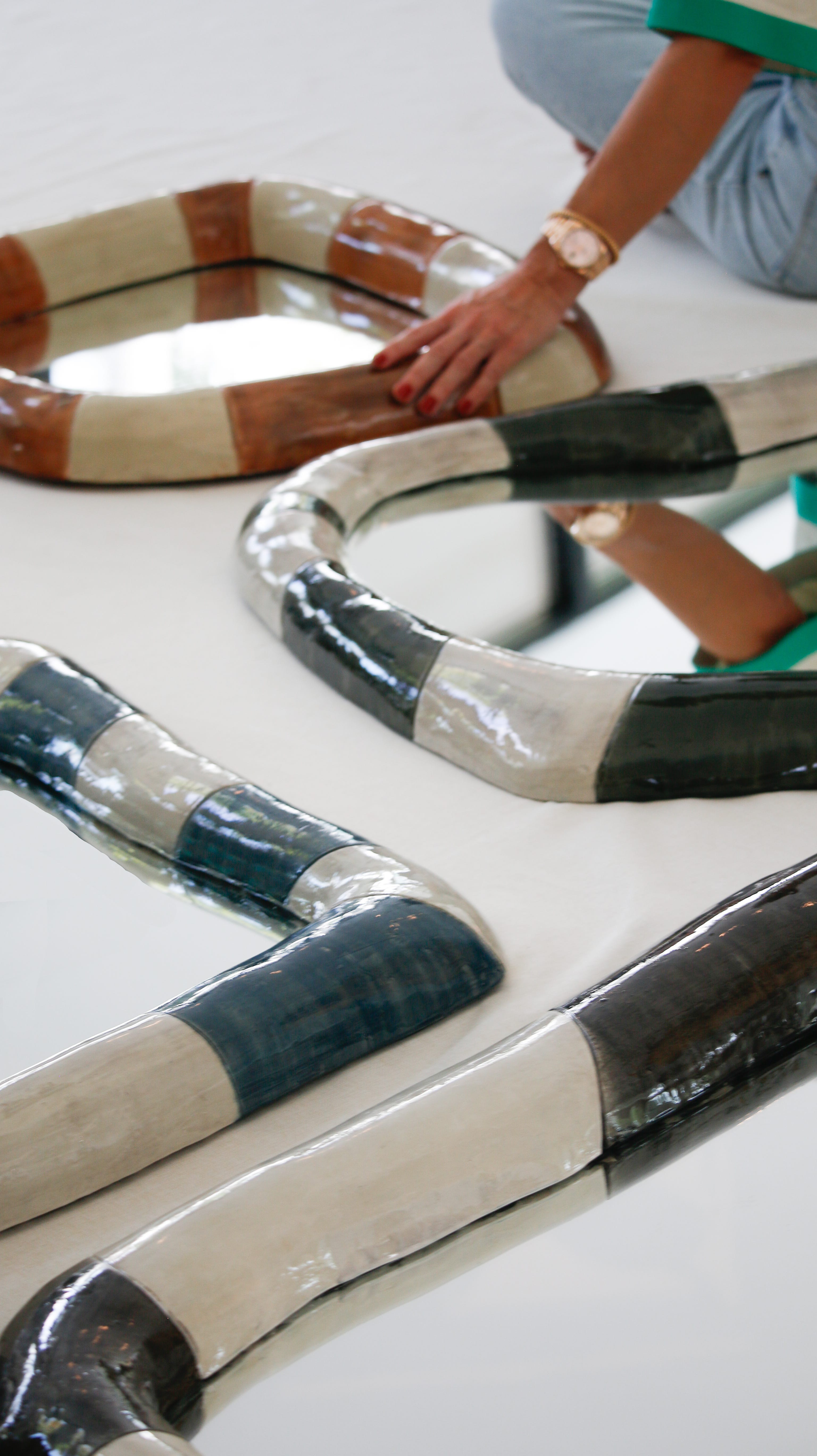
The striped mirrors have always carried a certain optimism.
Their rhythm feels almost architectural, yet playful at the same time. The alternating bands of color create movement even before the mirror begins reflecting its surroundings.
Throughout the day, sunlight travels across their glazed surfaces, making the frame itself feel animated.
I often think of them as objects that celebrate leisure.
They remind me of striped umbrellas on Mediterranean beaches, woven textiles drying under the Caribbean sun, sailboats moving slowly across the horizon, and the relaxed elegance that arrives when days become longer.
Summer seems to belong to them naturally.
This year, however, three new mirrors entered the collection.
Each explores sculpture from a different perspective.
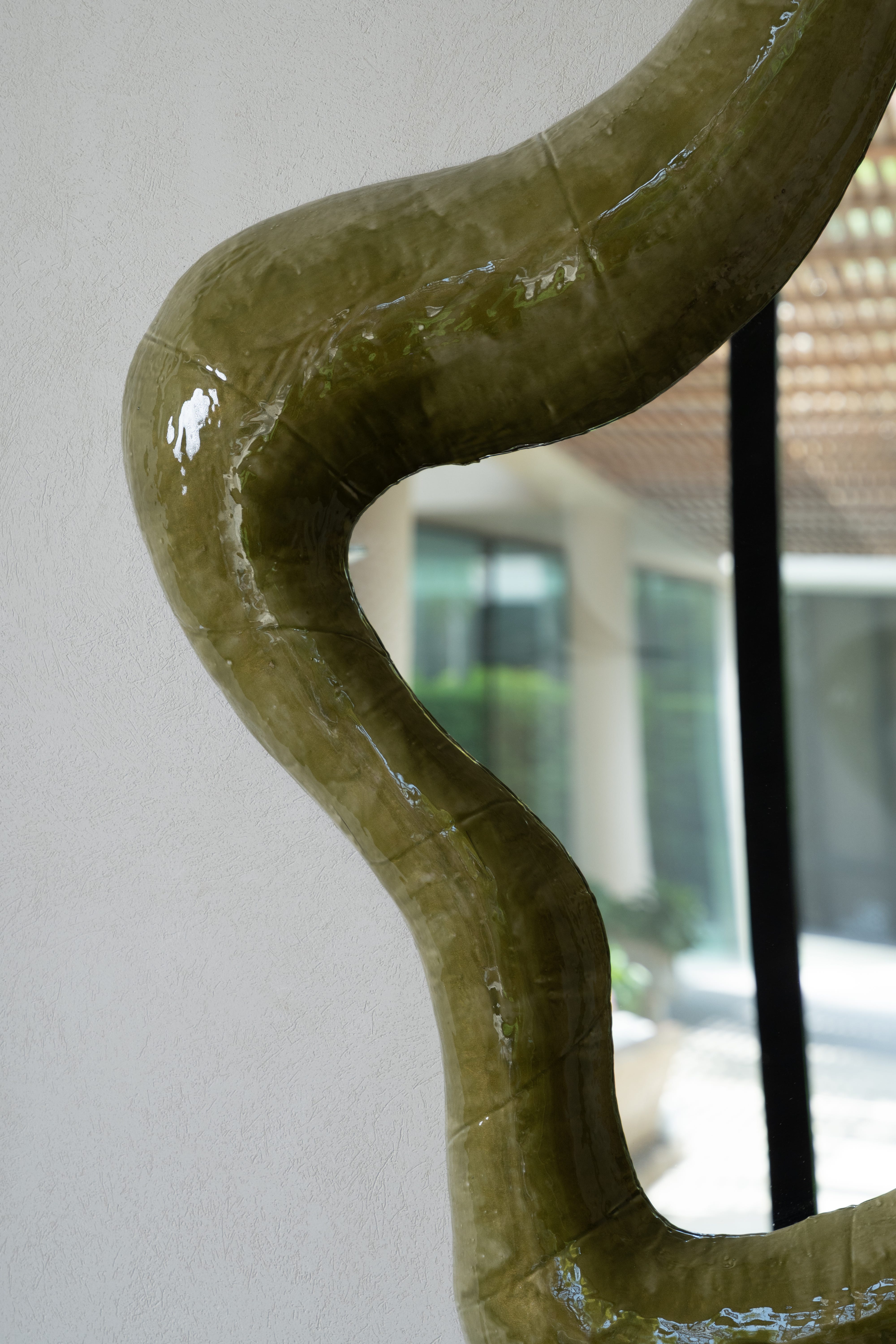
One is finished in a rich botanical green, with generous curves that feel almost as though they have been shaped by water over time.
Its glossy surface captures reflections with remarkable softness, allowing surrounding greenery and changing daylight to become part of the piece itself.
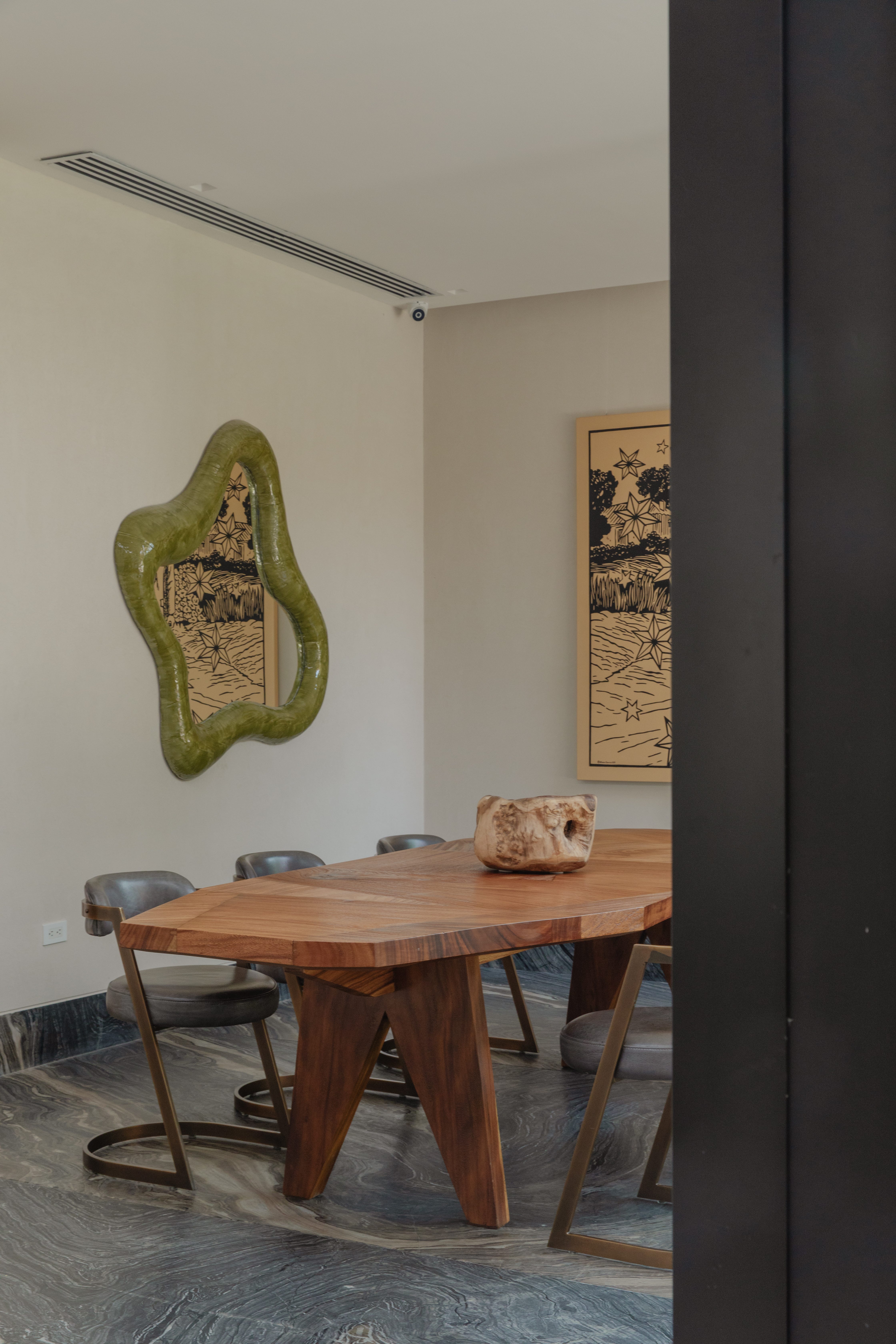
Rather than reflecting only what’s in front of it, it seems to borrow from its surroundings.
Trees, shadows, architecture, and even the changing weather become part of the composition.
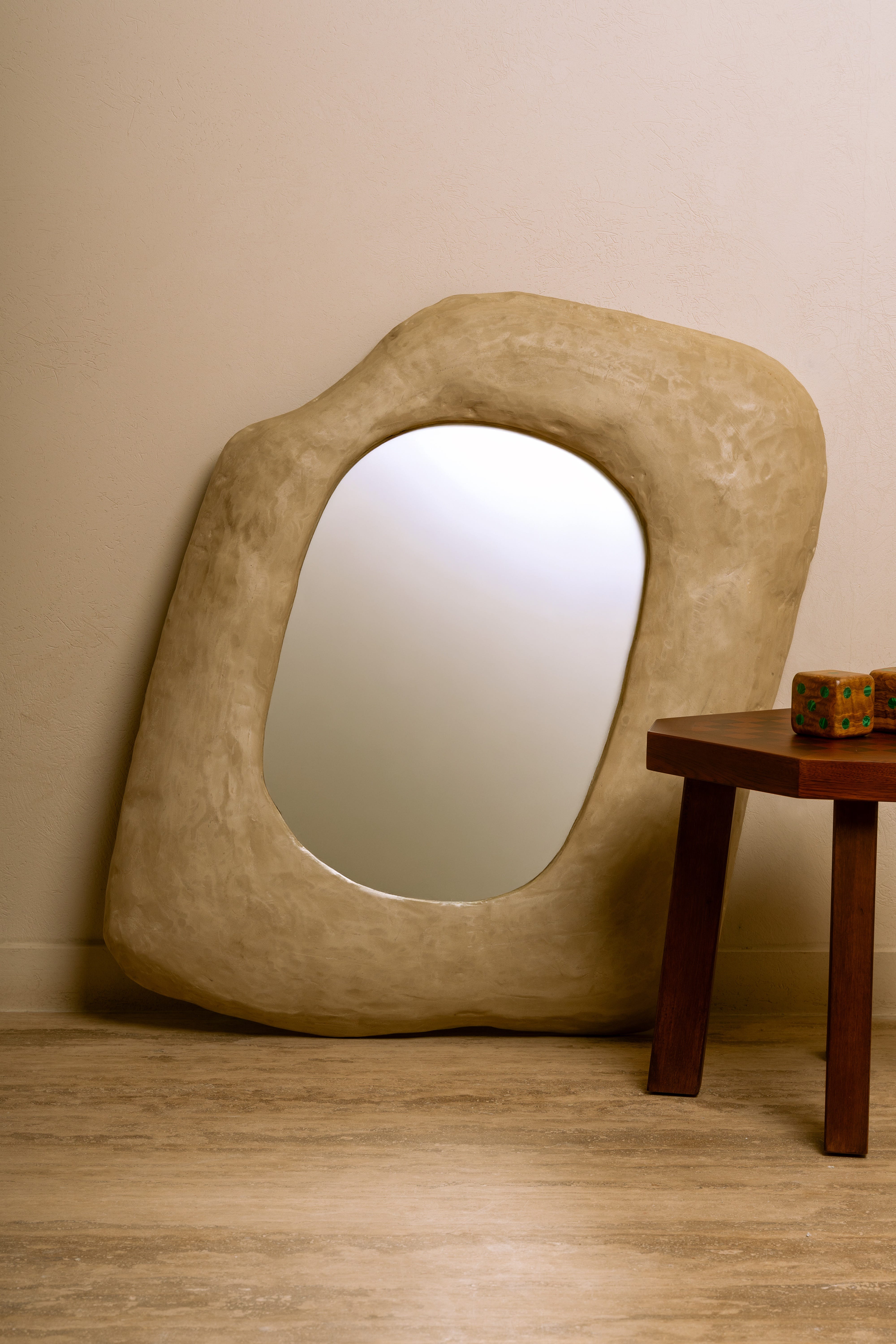
Another embraces a warm natural finish, quieter and more restrained.
Its rounded geometry feels almost architectural, reducing the frame to its essential volume while allowing texture to become the primary expression.
It doesn’t compete with a room.
It settles into it.
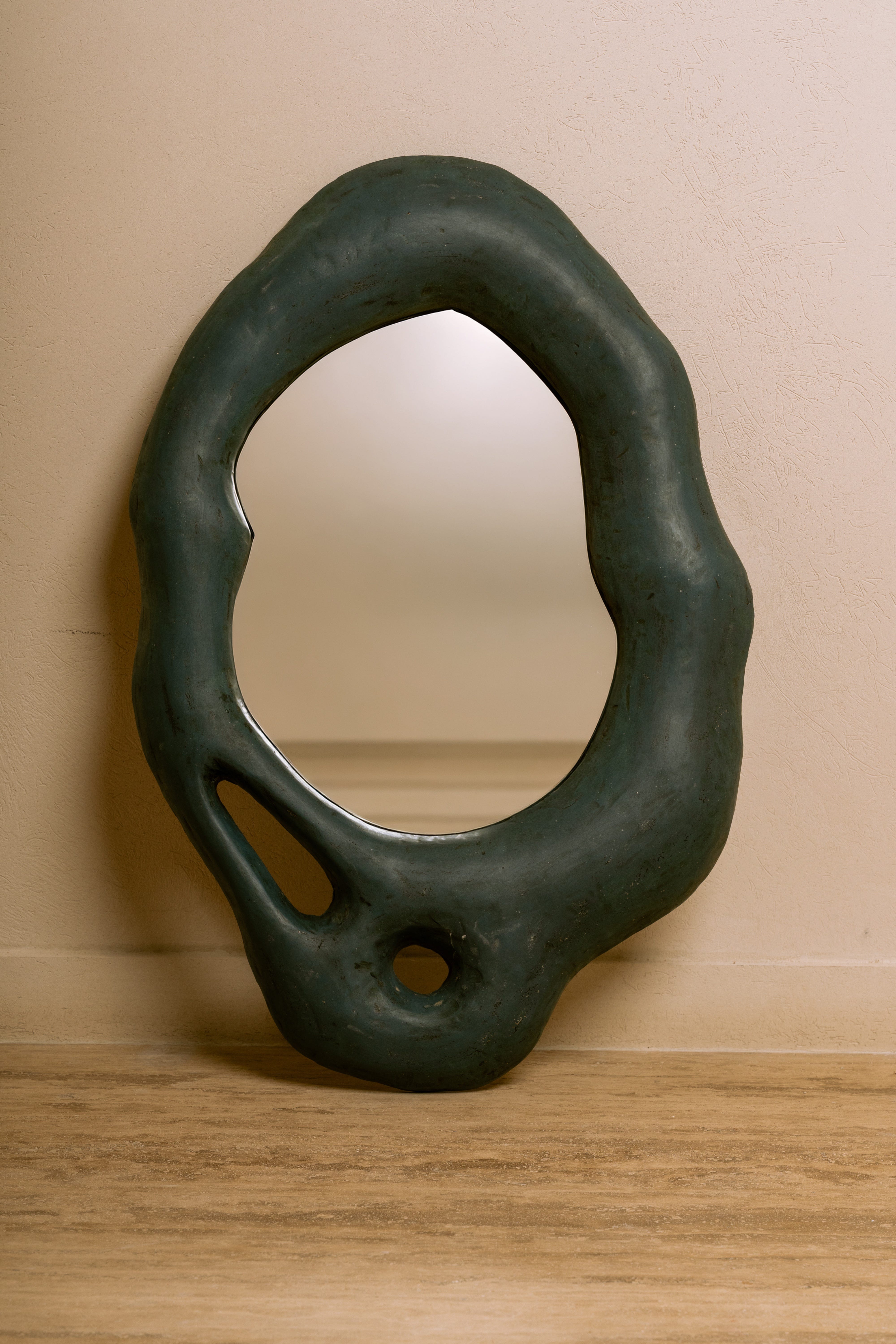
The third introduces a deep blue, its asymmetrical silhouette punctuated by sculptural openings that blur the boundary between mirror and object.
It is perhaps the most expressive of the group, less concerned with symmetry than with movement and negative space.
Although they are different, all three were born from the same question:
How can a mirror become more than something we look into?
How can it become part of the architecture itself?
Summer encourages us to notice these questions because we spend more time living with natural light.
We open windows.
We allow gardens to become extensions of our interiors.
The boundaries between indoors and outdoors soften.
Objects that respond to light suddenly become active participants in daily life.
Perhaps that is why I always think of summer as the season of reflection—in every sense of the word.
Not only because mirrors capture more sunlight, but because this time of year invites us to slow down enough to actually notice the spaces we inhabit.
The best objects rarely ask to be the center of attention.
They simply change the way a room feels.
And sometimes, that is enough to transform everything.

About Marcela Cure
Marcela Cure is an AD100 interior designer, contemporary artist, and collectible designer based in Colombia. As the founder of Marcela Cure Design Studio, she creates luxury residential interiors, collectible furniture, sculptural mirrors, lighting, and decorative objects that explore materiality, craftsmanship, and the relationship between art and function.
Working across interior design, collectible design, and contemporary art, Marcela is recognized for her sculptural approach to space and her use of natural materials including stone, marble, brass, wood, concrete, and resin. Her work has been exhibited internationally and featured in leading design publications, with collectors and clients across North America, Latin America, Europe, and the Middle East.
Marcela is a member of the Architectural Digest PRO Directory (AD PRO) and has been recognized as an AD100 designer, establishing her as one of the leading voices in contemporary design from Latin America.
In addition to her full-service interior design practice, Marcela launched the Virtual Design Studio, a dedicated online service that makes her design expertise accessible to clients worldwide through remote consultations and curated virtual design packages. While her studio continues to offer comprehensive, full-scope interior design projects, the Virtual Design Studio is designed for clients seeking expert guidance and tailored design solutions in a flexible, remote format.
Her journal explores interior design, collectible design, architecture, craftsmanship, materials, contemporary art, travel, and the creative process, offering a behind-the-scenes perspective on designing meaningful spaces and collectible objects.